Preparing Raw Land for Residential Development
Subdivision Site Development in Glasgow for multi-lot projects requiring large-scale earthmoving and infrastructure grading
Riverview Excavation LLC provides subdivision site development services throughout Glasgow, Kentucky for developers who need raw land transformed into build-ready residential lots with roads, drainage, and utility corridors. You call when you have acreage that will be divided into multiple homesites and the land requires major earthmoving to establish elevations, lot pads, and drainage systems before infrastructure installation can begin. This work involves mass excavation, large-scale grading, and terrain reshaping across expansive sites, often covering dozens of acres and requiring coordination with civil engineers, surveyors, and utility contractors.
Subdivision development begins with clearing vegetation and removing unsuitable soil, followed by excavation to establish the depth and elevations needed for roads, building pads, and stormwater management systems. Grading reshapes the terrain so that each lot drains properly, roadways meet grade specifications, and retention areas function as designed. In Glasgow and the surrounding region, subdivision projects must account for soil conditions, seasonal drainage patterns, and long-term stability to ensure that homes built on the lots will not experience settling or water problems years after construction is complete.
If you are developing a residential subdivision and need large-scale earthmoving to prepare the land for infrastructure and home construction, reach out to discuss your project scope and timeline.
What the Site Looks Like After Development Earthwork
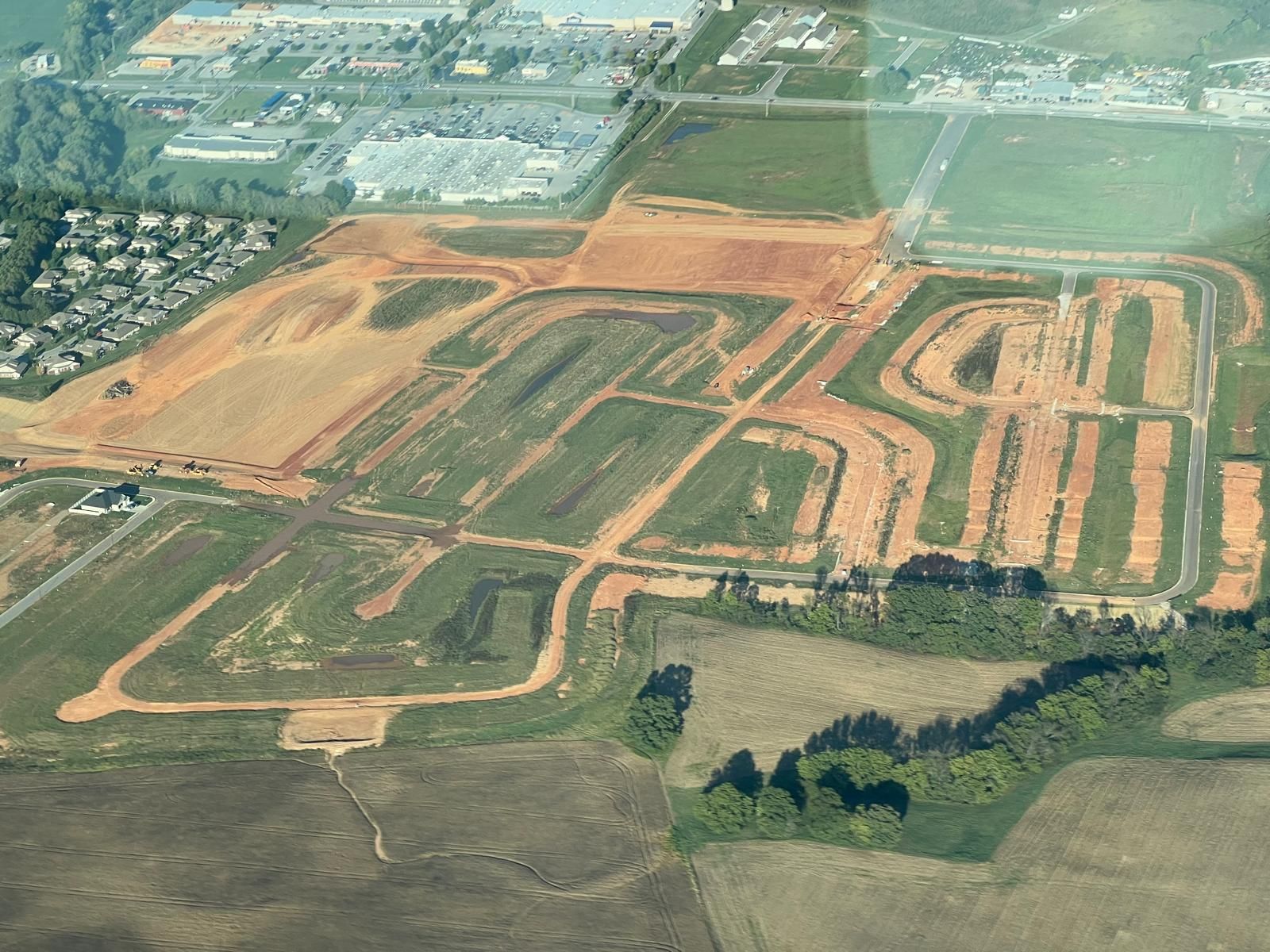
Once subdivision site development is complete, you will see clearly defined building lots with stable pads graded to the elevations shown on your civil plans. Roadway corridors are cut and shaped to meet grade specifications, and drainage paths direct water toward retention areas or stormwater systems. Utility trenches are excavated to the depths required for water, sewer, and electric lines, and access routes allow construction traffic to move across the site without damaging prepared lots.
Riverview Excavation LLC uses heavy equipment to efficiently move large volumes of soil and rock across subdivision sites, coordinating with surveyors to maintain accurate elevations throughout the grading process. You will notice that lot pads are level and compacted, that drainage flows away from building areas, and that the site is ready for utility installation and road construction. The earthwork provides a stable foundation that will support homes, driveways, and infrastructure without settling or shifting over time.
Subdivision development requires careful planning and phasing, as earthwork must be completed before utilities can be installed and roads can be paved. Experienced operators understand how to sequence excavation and grading so that material is moved efficiently and the site remains accessible for contractors. Weather, soil conditions, and coordination with other trades all affect the timeline, and clear communication helps prevent delays that can slow the overall development schedule.
Questions About Subdivision Development Work
Developers and contractors often ask about the equipment, timeline, and coordination required for large subdivision earthmoving projects.
What equipment is used for subdivision site development?
Excavators, bulldozers, motor graders, tractors, pull scrapers and haul trucks are used to move soil, shape terrain, and establish elevations across the development. GPS-guided equipment helps maintain grading accuracy on large sites.
How does subdivision grading prevent drainage problems in residential lots?
Proper grading ensures that each lot slopes away from building pads and directs water toward drainage systems or retention areas. This prevents standing water, foundation damage, and erosion after homes are built.
When does subdivision earthwork occur during the development process?
Earthwork typically begins after permits are approved and surveying is complete. It must be finished before utilities, roads, and individual home construction can proceed.
Why is accurate excavation important for long-term subdivision stability?
Accurate excavation and grading ensure that building pads rest on stable, compacted soil at the correct elevation. This prevents settling, foundation cracks, and drainage failures that can occur years after homes are occupied.
What factors in Glasgow affect subdivision development timelines?
Soil type, rock layers, groundwater, and seasonal weather all influence how quickly earthwork can be completed. Clay soils require different handling than sandy material, and wet conditions can delay grading and compaction work.
If your residential development project requires large-scale excavation and grading to prepare the land for lots, roads, and utilities, contact Riverview Excavation LLC to review your site plan and coordinate the earthwork with your overall development schedule.